Back to Blog

Why Co-Living Pet Products Are Becoming a Strong Retail Category
Why Co-Living Pet Products Are Becoming a Strong Retail Category

Modern pet owners want pet products that match home decor. This article analyzes the rising co-living furniture trend, including pet-behavior-focused design, material grading and OEM customization solutions, helping brands launch premium, differentiated pet furniture lines for global markets.
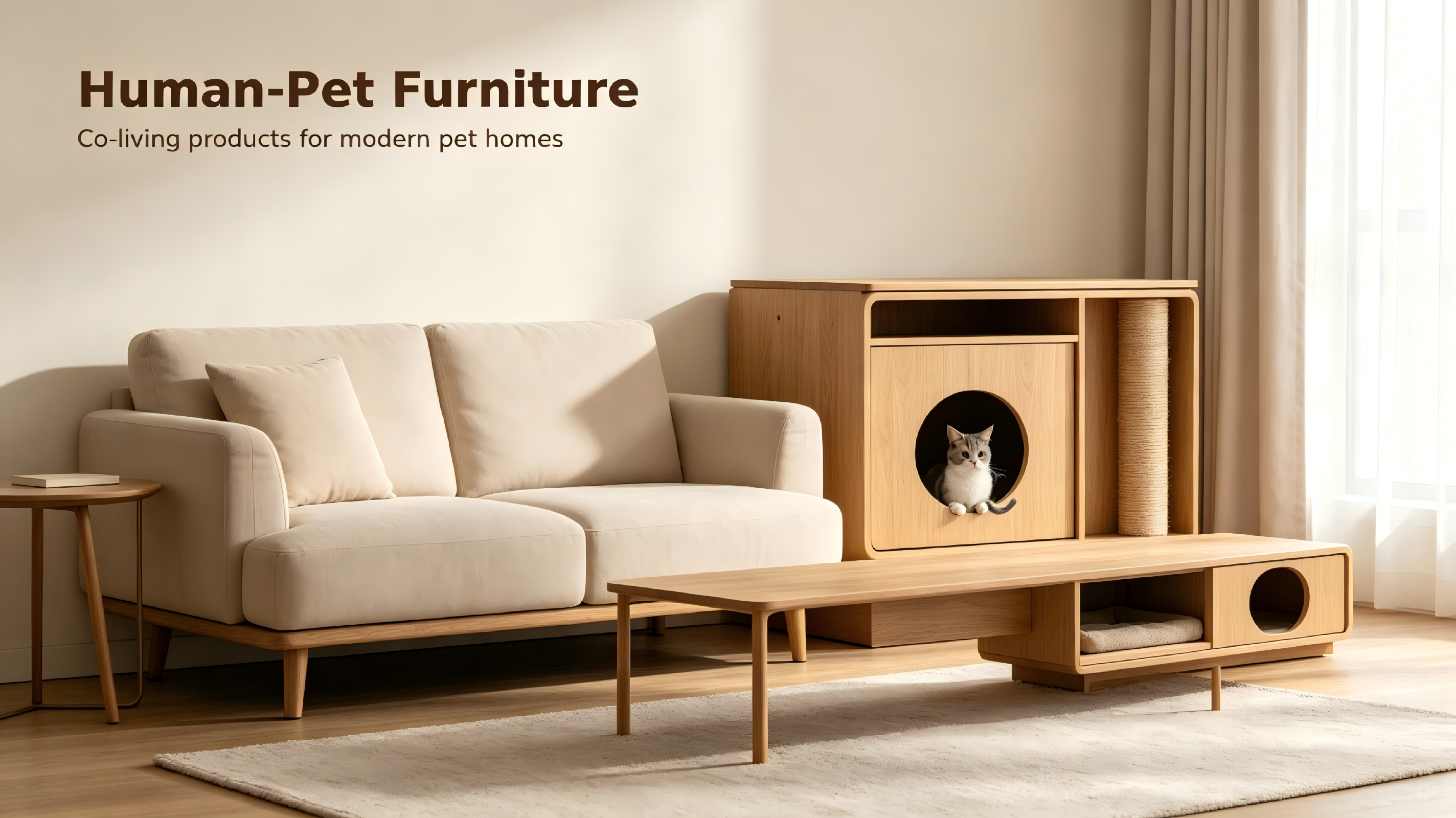
Suggested hero image for Article 2.

Recommended file name: jtpaws-human-pet-furniture-co-living-hero.png
Alt text:
Modern human-pet furniture for shared living spaces, including sofa-side pet house and cat scratch panel.


Pet furniture is moving into the living room

Pet furniture is changing. In the past, many pet products were designed to stay in the corner of the room: a dog bed on the floor, a cat scratcher near the wall or a small pet house hidden away from the main living area.

Today, more pet owners see their pets as part of the home environment. They want products that work for the animal, but still look good beside a sofa, bed, balcony, desk or living room cabinet.

This is where human-pet furniture, also called shared pet furniture or co-living pet furniture, is becoming more interesting for pet brands and retailers.

What is human-pet furniture?

Human-pet furniture is designed for both the pet and the home. It is not only a pet bed or a cat tree. It considers how people and pets share the same space.

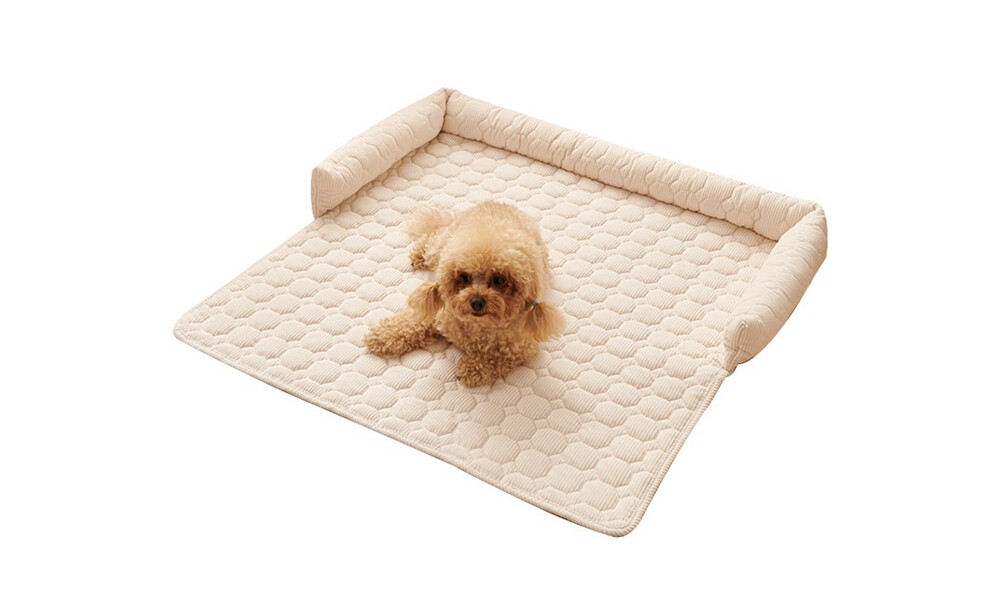
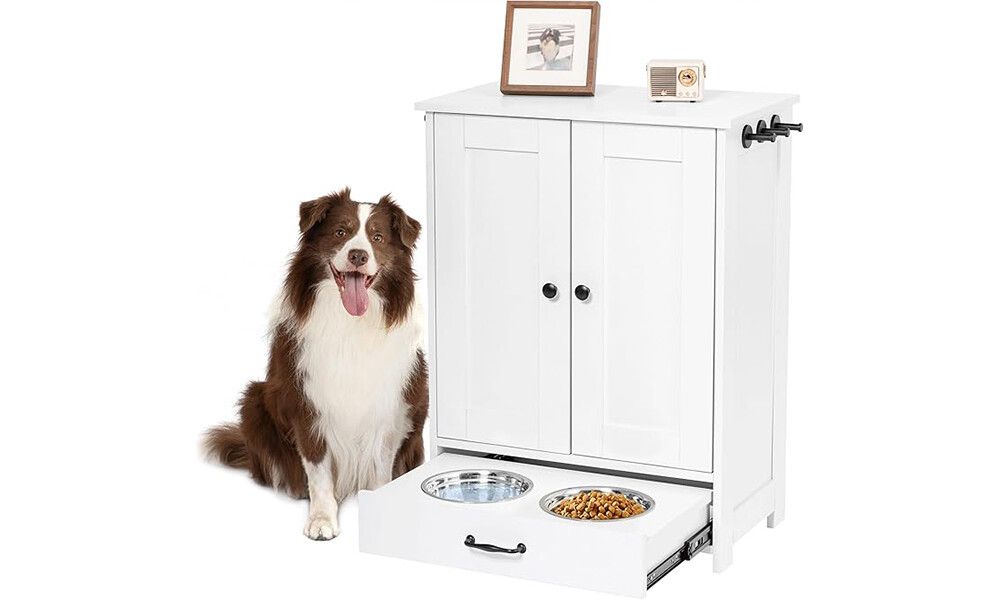
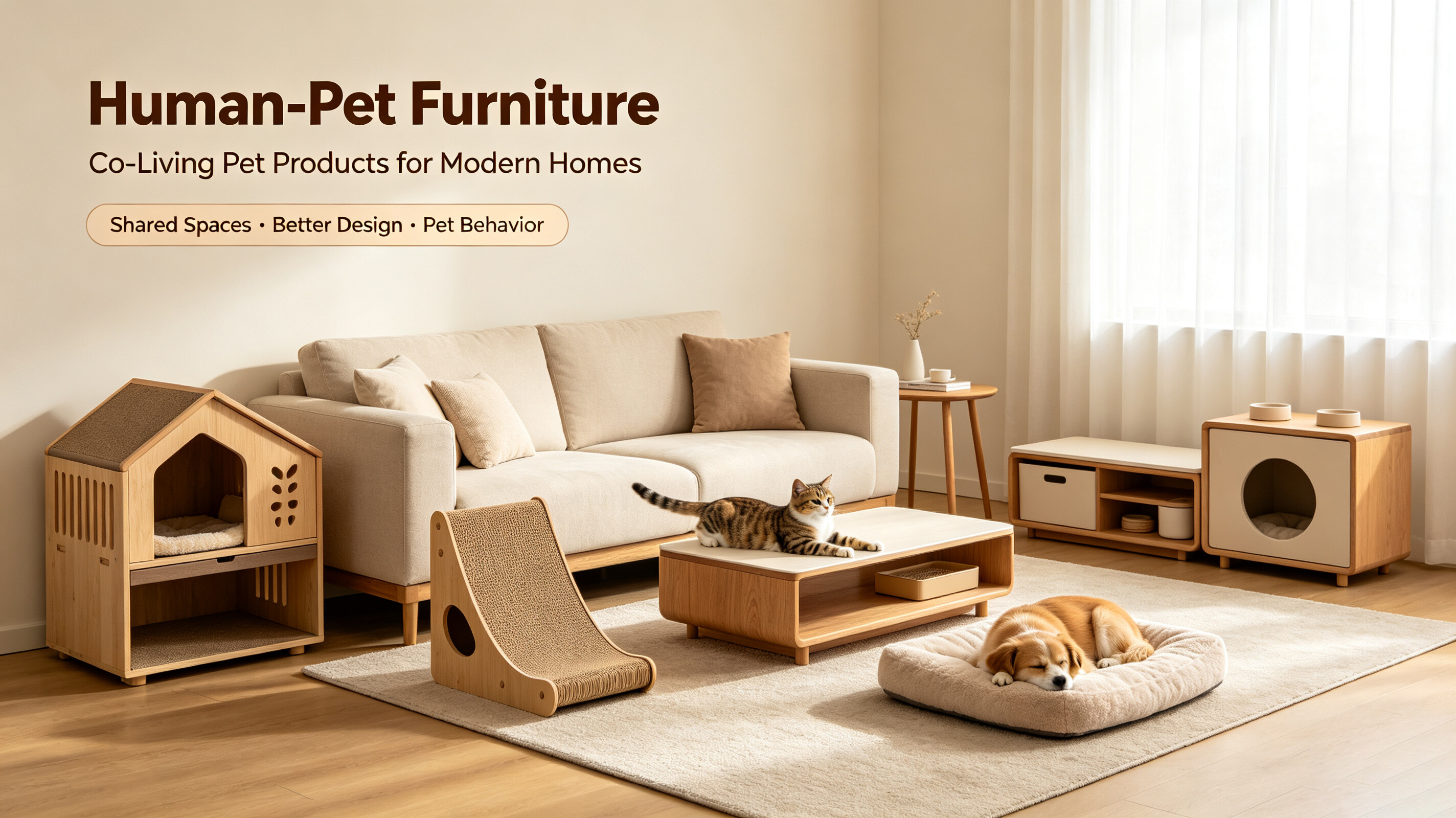
Examples include sofa-side pet houses, cat scratch furniture that matches home decor, dog resting furniture for the living room, hidden pet houses built into cabinets or side tables, feeding and storage stations for small homes, and shared resting products for pets and owners.

The idea is simple: pet products should not make the home feel messy. They should support daily pet behavior while fitting into the owner’s lifestyle.

Why retailers should pay attention to this category

Human-pet furniture sits between pet supplies and home living. That gives it a different value compared with basic pet accessories.

A simple pet bed may compete mainly on price. A well-designed shared pet furniture item can compete on design, material, function and lifestyle appeal. This makes the category more suitable for brands that want to build a premium or differentiated product line.

In European and North American markets, many homes and apartments need smarter use of space. Pet owners may not want a large traditional cat tree that looks out of place. They may prefer a compact cat scratch cabinet, a sofa-side cat house or a pet furniture piece that blends with wood, fabric, neutral colors and modern interiors.

Good design starts from pet behavior

Human-pet furniture should never be only about appearance. Pets still need products that match their natural habits.

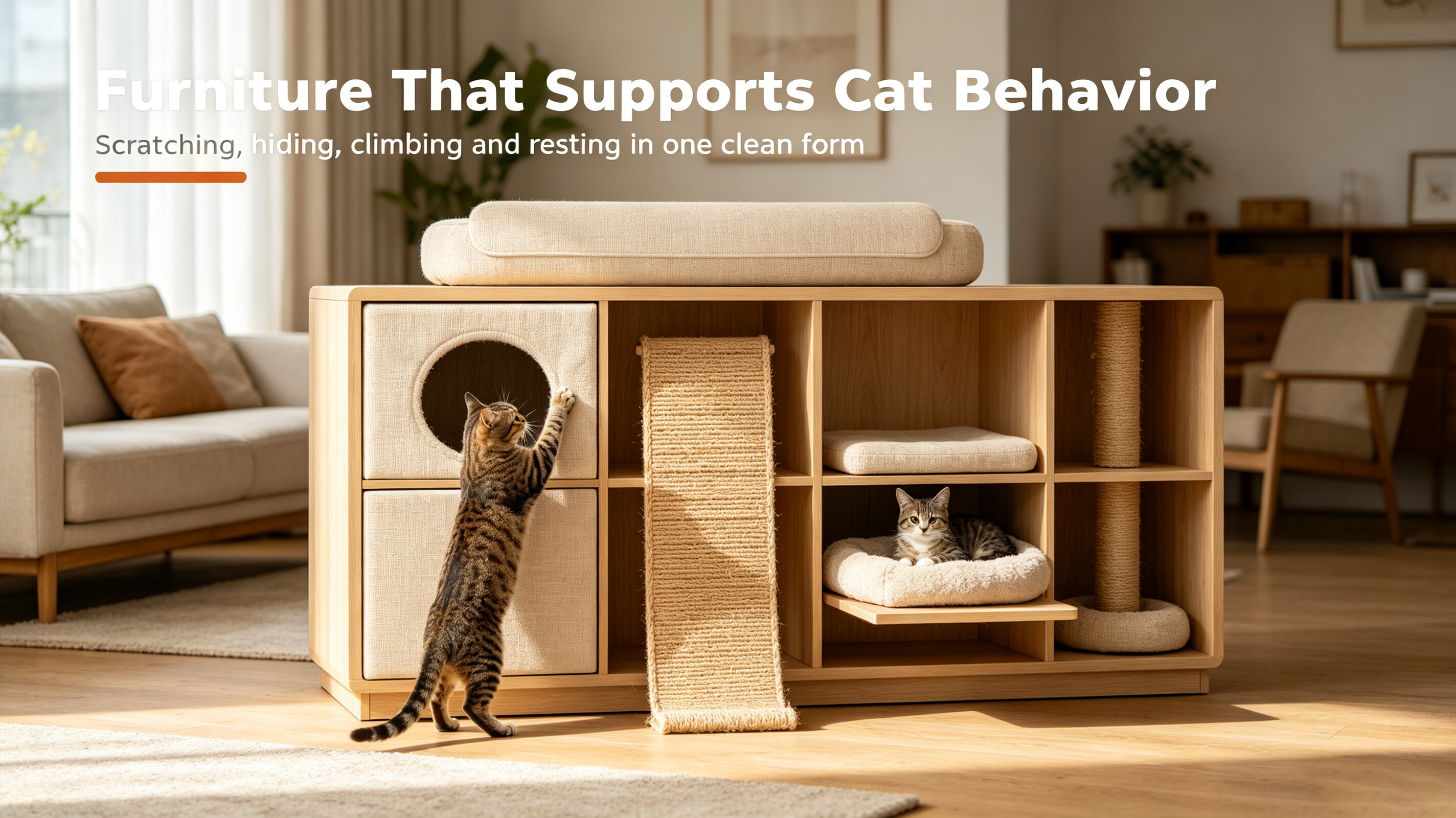
Cats need scratching surfaces, hiding spaces, climbing levels and resting areas. Dogs need stable resting spots, soft support, easy entry and washable surfaces. If the product looks beautiful but does not work for the pet, customers will not use it for long.

For cat furniture, sisal scratching areas, stable platforms, rounded edges and comfortable resting spots are important. For dog furniture, cushion support, fabric durability, anti-slip design and easy cleaning are more relevant.


Suggested supporting image: cat behavior and shared home furniture.

Recommended file name: jtpaws-cat-scratch-furniture-shared-home-design.png
Alt text:
Cat scratch furniture with hiding space, sisal scratching panel, resting platform and shared home design.


Materials decide the final positioning

Material choice has a major impact on how human-pet furniture is perceived.

Wood, plywood, MDF, fabric, sisal, felt, metal frames and washable cushions can all be used depending on the product direction. A premium home-style product may use cleaner wood finishes and neutral fabric colors. A more functional product may focus on scratch resistance, easy cleaning and modular assembly.

For B2B buyers, it is important to decide the target price range before development. A low-cost product, a mid-range retail product and a premium private label item will require different material choices, packaging methods and production details.

Packaging and assembly matter more than many buyers expect

Pet furniture is often larger than small pet accessories, so packaging must be considered early. Oversized packaging can increase shipping cost. Complicated assembly can increase customer complaints. Weak cartons can create damage during transport.

For online retailers, clear assembly instructions, protected corners, compact carton design and replacement-part planning can improve the customer experience. For physical stores, packaging needs to clearly show the final product, size, function and lifestyle use.

A good pet furniture manufacturer should understand not only how to make the item, but also how it will be shipped, stored, displayed, assembled and reviewed by end customers.

Private label opportunities in human-pet furniture

Human-pet furniture is a strong category for private label development because small design changes can create a clear brand difference.

A brand may choose a warmer wood tone for a Scandinavian-style market. Another retailer may prefer beige sisal and soft fabric for cat furniture. A home lifestyle brand may want a sofa-side pet house that looks closer to furniture than a traditional pet product.

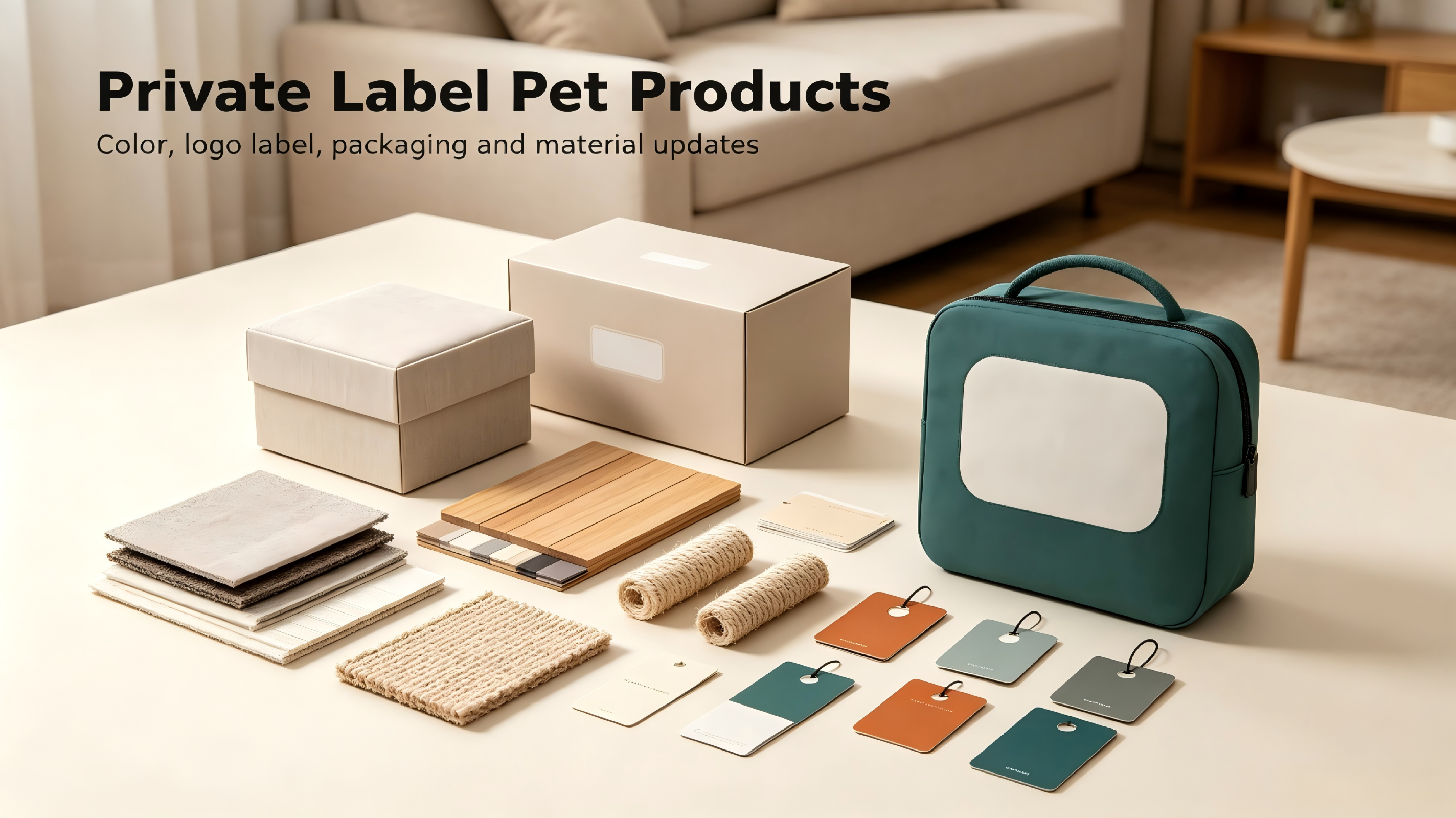
Private label options can include custom colors, logo labels, branded packaging, adjusted dimensions, material upgrades, different cushion covers, modified scratching surfaces and retail-ready instruction sheets.


Suggested supporting image: private label customization.

Recommended file name: jtpaws-oem-private-label-pet-products-custom-packaging.png
Alt text:
Private label pet products with custom logo label, packaging, material colors and product customization options.


Final thoughts

Human-pet furniture is not just a design trend. It reflects how people now live with their pets. Pet owners want their homes to stay comfortable, clean and attractive, while still giving their dogs and cats a proper space of their own.

For pet retailers, this category offers room for better design, stronger branding and higher product value. The key is to choose products that are attractive enough for the home, functional enough for pets and practical enough for stable production.

Suggested CTA: Planning a private label human-pet furniture line? JTPAWS can support product development, material selection, packaging and stable repeat production.

Internal note: Article positioning is based on JTPAWS public product navigation and service pages, including Pet Travel Gear, Human-Pet Furniture, Pet Toys, OEM/ODM, Private Label, Custom Packaging and Quality Control.