
Pet Product Quality Control: Standards & Best Practices
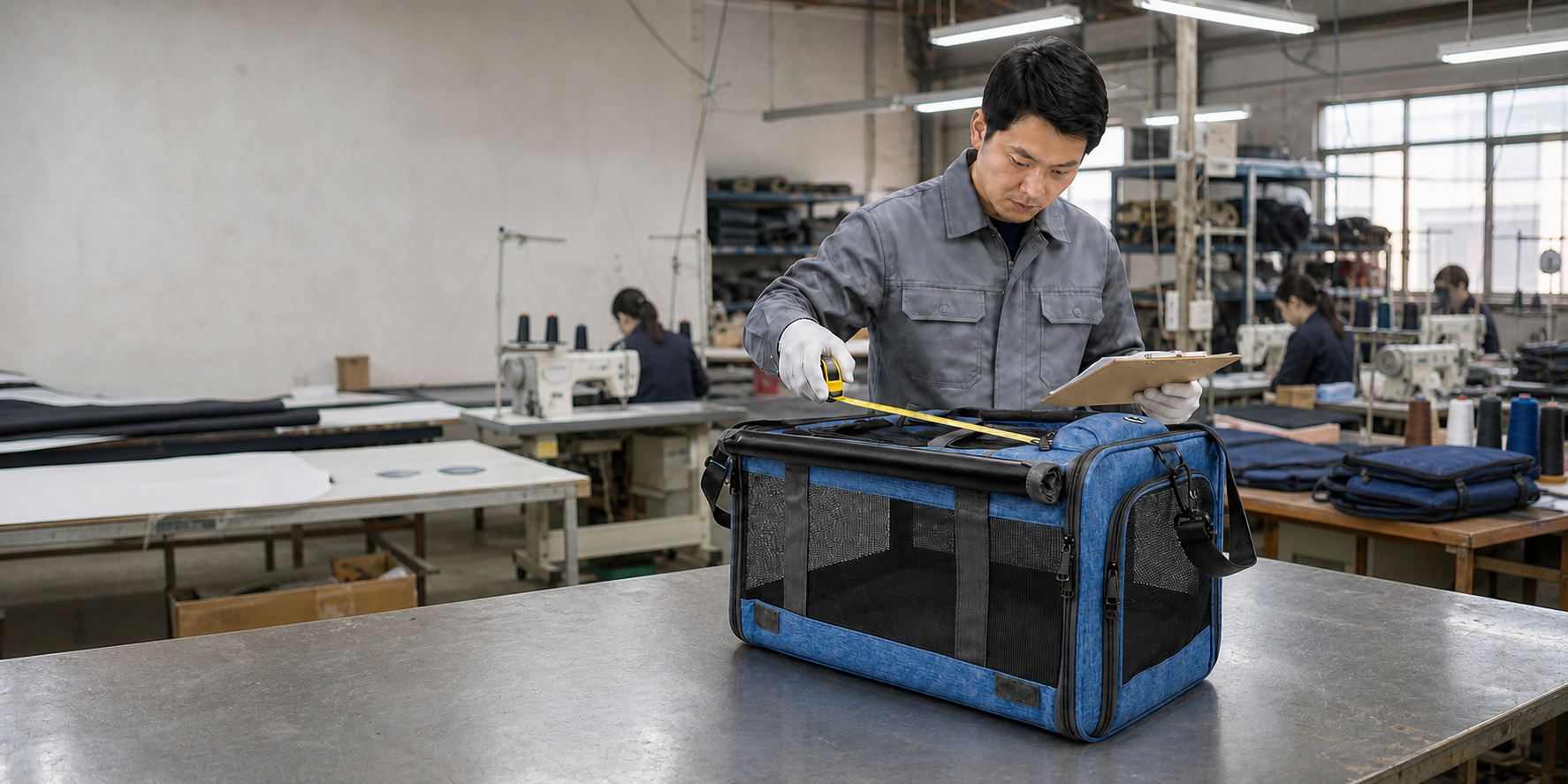
A detailed guide to quality control in pet product manufacturing, covering inspection procedures, testing standards, material safety and compliance requirements for international markets.
Why Quality Control Matters in Pet Products
Pet products must meet high standards because they directly affect animal safety and owner trust. A quality failure can result in product recalls, negative reviews, regulatory penalties and lasting brand damage. Effective quality control (QC) is not just about catching defects, it is about building systems that prevent them.
Quality Control Framework
A project-specific QC plan may cover the following stages of production, depending on the product category and buyer requirements:
1. Incoming Material Inspection
Verify material certificates and test reports from suppliers
Check material specifications against purchase requirements
Test critical properties (tensile strength, color fastness, chemical safety)
Reject non-conforming materials before they enter production
2. In-Line Production Checks
Monitor stitching quality, seam strength and assembly accuracy
Verify dimensional tolerances at each production stage
Check color consistency and print quality
Identify and correct issues before they propagate through production
3. Final Inspection
Sampling inspection or AQL-based inspection methods may be discussed where applicable.
Functional testing of moving parts, closures and safety features
Visual inspection for cosmetic defects
Packaging verification including labels, barcodes and inserts
4. Pre-Shipment Verification
Carton count and weight verification
Shipping mark and label accuracy
Container loading supervision
Documentation completeness check
Material Safety Standards
Depending on the product category and destination market, buyers may need to review the following material-safety and compliance requirements:
Chemical Safety: Requirements such as REACH or CPSIA may apply depending on the product and destination market.
Heavy Metals: Lead, cadmium and mercury limits may need to be reviewed for relevant materials and markets.
Phthalates & BPA: Restrictions may apply to certain plastic or pet-contact materials.
Flammability: Textile or foam products may require market-specific flammability assessment.
Physical Safety: Small-parts testing, sharp-edge checks or choking-hazard assessment may be relevant for certain products.
Testing Methods
Possible testing procedures may include the following, depending on the product, material and destination-market requirements:
Tensile Strength Test: Measures fabric and seam breaking force
Color Fastness Test: Evaluates resistance to washing, rubbing and light exposure
Chemical Analysis: Laboratory testing for restricted substances when required for the product and target market.
Durability Testing: Simulated use cycles for wear-prone components
Dimensional Measurement: Precision checking against specification tolerances
Working with Your Manufacturer on QC
Effective quality control requires collaboration between buyer and manufacturer:
Define clear quality specifications and acceptance criteria before production
Agree on inspection points and reporting frequency
Establish corrective action procedures for non-conformance
Conduct periodic factory audits to verify QC system effectiveness
Maintain open communication channels for quick issue resolution
Third-Party Inspection
Many buyers supplement factory QC with third-party inspection services:
Independent verification of quality standards
Unbiased reporting on production conditions
Pre-shipment inspection before payment release
Factory capability and compliance audits
Continuous Improvement
Quality control should evolve over time:
Track defect rates and identify recurring issues
Analyze customer returns and complaints for root causes
Update specifications based on field performance data
Invest in training and equipment upgrades
Benchmark against industry best practices
Conclusion
Quality control is a shared responsibility between manufacturer and buyer. By agreeing on product specifications, inspection points and documentation requirements before production, both parties can create a clearer basis for quality control and market compliance. The applicable testing and documentation should always be confirmed for the specific product and destination market.